
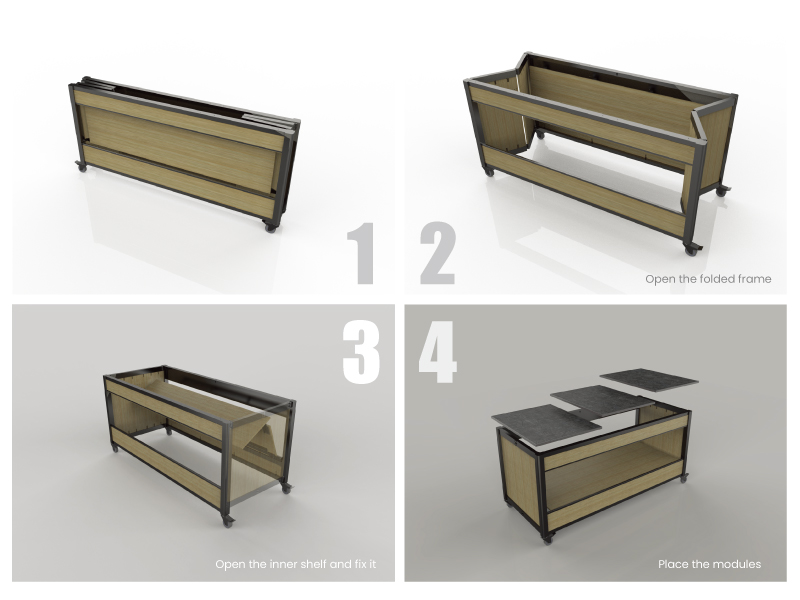
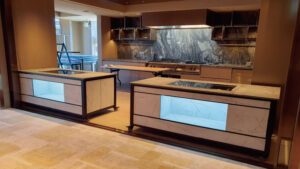
Service in modern hospitality is no longer static. Hotels, banquet halls, and event venues are expected to transform spaces quickly—often multiple times a day—while maintaining a consistent standard of presentation. In this evolving environment, service infrastructure must be flexible, efficient, and visually aligned with contemporary expectations.
This is where Movendis Folding and Buffet Stations redefine service delivery. Designed to adapt to changing formats without compromising elegance, these stations support both operational efficiency and refined buffet presentation.
The Changing Nature of Buffet Service
Traditional buffet setups were designed for permanence. While functional, they often limited how spaces could be used and made transitions between events time-consuming. Today’s hospitality environments demand solutions that can adapt to varying guest counts, layouts, and service styles.
Folding and modular buffet stations respond to this shift by allowing:
- Faster transitions between service formats
- Flexible layouts for different event types
- Efficient use of storage and floor space
This adaptability is essential for venues that host diverse dining experiences throughout the day.
What Defines a Modern Folding Buffet Station?
A modern folding buffet station is defined by how well it balances adaptability with stability. Unlike basic portable tables, professional folding stations are engineered for repeated setup and dismantling without loss of strength or appearance.
Key characteristics include:
- Foldable structures that remain rigid during service
- Balanced weight distribution for stability
- Design that supports both temporary and semi-permanent use
Understanding these factors helps operators choose stations that perform reliably in professional settings.
Folding vs Fixed Buffet Stations: Knowing When to Use Each
Both folding and fixed buffet stations serve different operational needs.
- Folding buffet stations are ideal for multi-purpose venues, banquets, outdoor events, and catering operations where layouts change frequently.
- Fixed buffet stations work best in permanent dining spaces with consistent service formats.
Knowing when flexibility is required helps venues invest in the right infrastructure rather than forcing one solution to fit every scenario.
How Buffet Station Design Influences Guest Flow
Buffet service is as much about movement as it is about food. Poorly designed layouts can lead to congestion, uneven queues, and guest frustration.
Well-designed folding and buffet stations help by:
- Creating clear entry and exit points
- Allowing modular arrangements based on menu size
- Reducing crowding around popular items
Improved flow enhances guest comfort and keeps service areas organised.
The Importance of Weight, Balance, and Mobility
Portability alone does not guarantee ease of use. A folding buffet station must remain stable when fully loaded and easy to reposition when needed.
Key considerations include:
- Even weight distribution across the frame
- Stable footing during service
- Smooth, controlled movement during setup and repositioning
These factors directly affect safety, staff confidence, and service efficiency.
Surface Performance: Why Material Choice Matters
Buffet stations face constant exposure to heat, spills, cleaning agents, and high visual scrutiny. Material choice determines how well a station performs over time.
High-quality buffet stations typically feature:
- Heat- and moisture-resistant surfaces
- Non-porous finishes for easy cleaning
- Durable laminates that maintain appearance
Choosing the right surfaces reduces maintenance effort and extends product lifespan.
Modular Design for Evolving Service Needs
Hospitality concepts evolve — menus change, event sizes vary, and service expectations rise. Modular buffet stations allow venues to adapt without replacing entire setups.
Modularity enables:
- Expansion for large events
- Compact layouts for intimate gatherings
- Consistent visual language across formats
This flexibility supports long-term planning and cost efficiency.
Designing Buffet Stations Around Staff Workflow
Efficient service depends on tools that support natural movement. Poorly designed stations increase physical strain and slow down replenishment.
Well-planned folding and buffet stations:
- Reduce unnecessary bending and reaching
- Improve access to service and display areas
- Simplify setup and breakdown
This results in smoother workflows and more confident service delivery.
Storage and Transport in Event-Based Service
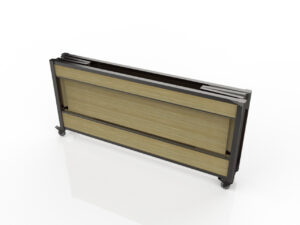
For banquets and catering operations, storage and transport are critical. Folding buffet stations are designed to collapse into compact forms, making them easier to store and transport between venues.
This improves:
- Space efficiency in storage areas
- Logistics for off-site events
- Speed of venue changeovers
Supporting Consistency Across Multiple Dining Formats
Guests expect consistent quality whether attending a breakfast buffet or a formal banquet. Folding and buffet stations help maintain this consistency by supporting polished presentation across changing layouts.
They allow venues to:
- Preserve visual standards across events
- Transition smoothly between service formats
- Deliver curated buffet experiences at any scale
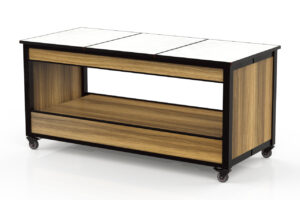
Service Infrastructure Designed for Modern Hospitality
Folding and buffet stations are no longer secondary service tools — they are integral to how hospitality spaces function today. Movendis approaches these solutions as adaptable service systems rather than static furniture.
By combining flexibility, durability, and thoughtful design, Movendis’ folding and buffet stations enable hospitality teams to work efficiently while delivering service that feels organised, adaptable, and consistently refined — no matter the occasion.
You can check out our blog “Motorized Maid Carts: The Future of Hotel Housekeeping Operations“