
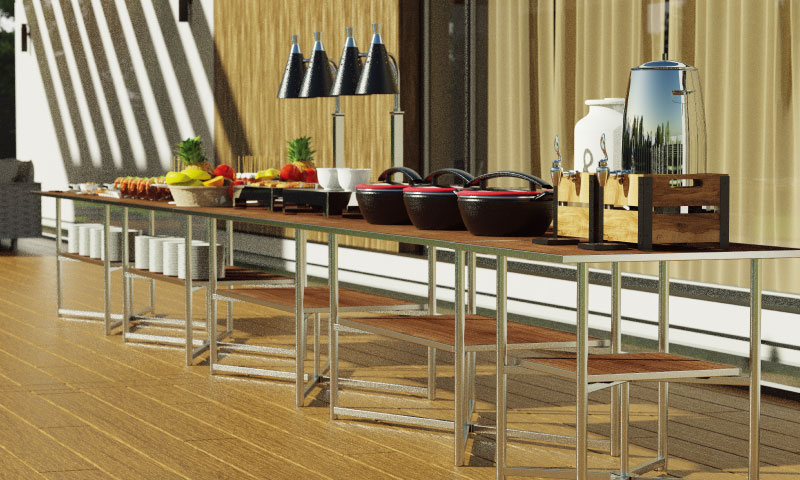
A guest may never step into the kitchen — but they always experience the service. From the moment a dish leaves the pass to the second it reaches the table, every movement shapes perception. Smooth transitions, quiet efficiency, and visual order all influence how a refined dining experience feels. In this space between preparation and presentation, modern service trolley designs play a crucial yet understated role.
Today, service trolleys are no longer just operational tools. They are carefully considered elements that support service flow, reinforce design intent, and elevate everyday hospitality interactions.
What Makes a Service Trolley Modern?
A modern service trolley is defined by how intelligently it supports contemporary service needs. Unlike traditional trolleys designed only for transport, modern designs are built around workflow, adaptability, and visual harmony.
Key characteristics include:
- Proportional shelf spacing for quick, intuitive access
- Balanced structure for stability during movement
- Materials chosen for both performance and aesthetics
Understanding these fundamentals helps hospitality teams select trolleys that truly support modern service environments.
How Service Trolley Design Affects Service Speed
Service speed is influenced not only by staff training, but also by the tools used on the floor. Poorly designed trolleys can slow teams down through awkward handling, limited storage, or instability.
Modern service trolley designs improve efficiency by:
- Allowing multiple service tasks in a single trip
- Keeping items clearly organized and accessible
- Reducing unnecessary back-and-forth movement
Over time, this contributes to smoother operations and more consistent service delivery.
How Service Trolleys Influence Table Turnover
Table turnover is often discussed in terms of menu planning or staffing, but service equipment plays a subtle supporting role. A well-designed trolley enables faster clearing, quicker resets, and more organized service during peak hours.
The result:
- Reduced wait times without rushing guests
- Better coordination between front and back of house
- More predictable service flow
Even small improvements in movement and organization can significantly impact daily performance.
The Psychology of Order in Dining Environments
Guests subconsciously associate order with quality. When service appears calm and controlled, confidence in the overall experience increases.
Modern service trolleys help create this sense of order by:
- Minimizing visible clutter
- Maintaining symmetry during tableside service
- Supporting clean, composed presentation
This psychological comfort plays an important role in how guests perceive professionalism and care.
Why Material Choice Matters in High-Traffic Spaces
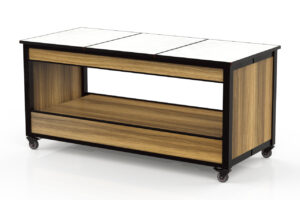
Hospitality environments demand equipment that can withstand constant use, frequent cleaning, and varying conditions. Material selection directly affects durability, maintenance, and long-term appearance.
Modern service trolley designs typically balance:
- Stainless steel for strength, hygiene, and longevity
- Wooden or wood-finish shelves for warmth and visual depth
This combination ensures the trolley performs reliably while remaining visually appropriate for premium dining spaces.
Understanding Mobility: More Than Just Wheels
Mobility is often reduced to wheel quality, but true mobility is about control. A trolley that moves too freely or lacks balance can disrupt service and guest comfort.
Modern trolleys focus on:
- Smooth, controlled movement
- Stability when stationary
- Quiet operation across different floor surfaces
These details allow staff to navigate dining areas confidently and unobtrusively.
Matching Trolley Scale to Dining Space Size
Scale plays a critical role in both functionality and aesthetics. Oversized trolleys can obstruct movement, while undersized ones may limit efficiency.
Educational considerations include:
- Compact profiles for smaller dining areas
- Adequate capacity for large restaurants or banquet spaces
- Proportions that align with circulation paths
Choosing the right scale ensures the trolley supports service without disrupting spatial flow.
Integrating Service Equipment into Interior Design Planning
In many projects, service equipment is added after interiors are finalized — often resulting in visual mismatch. Modern hospitality planning increasingly considers service trolleys during the design phase.
This approach helps:
- Maintain material and finish consistency
- Preserve visual clarity in open dining layouts
- Ensure service tools feel intentional
When integrated thoughtfully, trolleys enhance rather than interrupt design concepts.
Choosing Service Equipment That Ages Well
Design trends change, but service equipment must last. Modern service trolley designs that age well tend to feature:
- Neutral finishes
- Minimal detailing
- Timeless material combinations
This ensures long-term relevance even as interiors evolve.
Common Mistakes When Selecting Service Trolleys
Many operators unintentionally compromise efficiency by focusing only on price or capacity. Common oversights include:
- Ignoring weight balance and stability
- Choosing finishes that show wear quickly
- Overlooking shelf configuration and usability
Awareness of these pitfalls helps teams make better-informed deci sions.
 Making Smarter Choices in Service Equipment
Modern service trolley design is ultimately about enabling better service. By supporting staff efficiency, maintaining visual order, and adapting to different service formats, the right trolley contributes to dining experiences that feel seamless to guests and manageable for teams — day after day.
In hospitality, the most impactful tools are often the ones that work quietly in the background. And when designed with intention, a service trolley becomes more than equipment — it becomes part of the experience itself.
You can check out our blog “ Luxury In Motion: Bellman Luggage Cart for Premium Hospitality”