
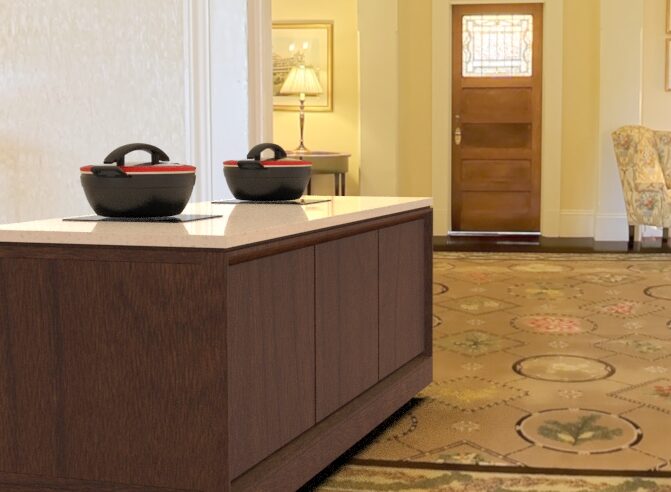
In todays competitive hospitality landscape, speed is no longer a differentiator — it is an expectation. Yet for hotels, banquet venues, and restaurants operating at scale, speed must align with consistency, safety, and brand presentation. Delivering meals quickly is important, but delivering them flawlessly is what sustains reputation.
Modern cooking stations are designed precisely for this balance. Built for high-volume professional environments, they enable faster service execution while protecting food integrity, workflow efficiency, and guest perception. For B2B buyers and hospitality operators, they represent infrastructure that strengthens both operations and brand value.
Operational Efficiency Built into the Design
Cooking stations are not standalone counters — they are structured service hubs. By integrating induction units, warming areas, plate storage, and preparation surfaces within a single footprint, they reduce service-flow fragmentation.
For hospitality businesses, this means:
- Reduced dependency on multiple equipment zones
- Faster coordination between kitchen and service teams
- Lower risk of service interruptions
- Greater output during peak hours
When equipment supports the workflow, teams naturally perform faster without compromising control.
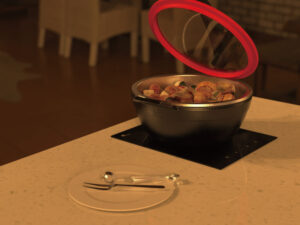
Precision Heating for Volume Consistency
Induction-based systems offer rapid heat response and precise temperature control. In high-volume service, this consistency is critical. Uneven heating leads to texture loss, drying, or food waste — all of which impact cost and brand perception.
Induction technology ensures:
- Stable holding temperatures
- Immediate heat adjustments
- Lower energy wastage
- Safer front-of-house operation
For B2B operators, this translates into predictable quality across every plate served, regardless of service intensity.
Supporting High-Volume Banquet Operations
Banquet and event environments require scalable solutions. Guest counts fluctuate, layouts change, and service windows are tight. Cooking stations designed with mobility and modular compatibility allow venues to reconfigure quickly without operational delays.
This flexibility supports:
- Faster event setup and breakdown
- Seamless expansion for larger guest counts
- Adaptable layouts for different service formats
- Efficient manpower utilization
The result is operational agility without added infrastructure complexity.
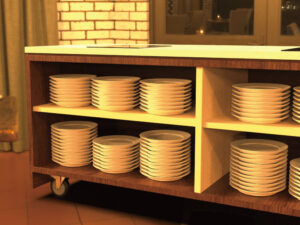
Structured Workflow Reduces Labor Pressure
Labor efficiency is a major consideration in hospitality management. Cooking stations streamline movement by keeping essential tools, plates, and warming systems within immediate reach.
By minimizing unnecessary staff movement, operators benefit from:
- Reduced service fatigue
- Faster plating turnaround
- Lower risk of coordination errors
- Improved team productivity
When infrastructure supports staff efficiency, service quality remains stable even with limited manpower.
Enhancing Guest Perception in Live Service
Live cooking counters are increasingly common in premium hospitality spaces. However, poorly structured setups can create congestion and inconsistency.
A well-designed cooking station maintains organized presentation while supporting rapid preparation. Clean surfaces, controlled heating, and defined service zones create a composed visual experience — reinforcing trust and professionalism.
For hotels and venues, this enhances brand perception while ensuring operational reliability.

Hygiene, Safety, and Compliance
Food safety standards are non-negotiable in commercial environments. Induction-based cooking stations reduce open flame risks and limit excessive surface heat, creating a safer front-of-house environment.
Smooth materials and simplified surfaces enable quicker cleaning between service cycles. This supports compliance with hygiene protocols while maintaining service speed — an essential requirement for professional operators.
Cost Control Through Energy and Waste Reduction
Speed must also align with cost management. Induction systems consume energy efficiently by heating cookware directly rather than surrounding air or surfaces.
Controlled warming reduces:
- Food spoilage during long service windows
- Reheating cycles
- Energy wastage
- Long-term utility costs
For B2B buyers, this ensures operational savings without compromising food quality.
Standardizing Service Across Locations
For hospitality groups operating multiple properties, consistency is critical. Cooking stations help standardize service infrastructure across outlets, ensuring uniform workflow, presentation, and heating performance.
This allows management teams to:
- Maintain consistent brand standards
- Simplify staff training
- Replicate service models efficiently
- Control operational variability
Standardized infrastructure supports scalable growth while protecting brand identity.
Long-Term Infrastructure Investment
Commercial cooking stations are built for durability. High-grade materials, modular design compatibility, and robust induction systems ensure long-term performance in demanding environments.
For procurement teams and decision-makers, this means:
- Reduced equipment replacement frequency
- Lower maintenance interruptions
- Stronger return on investment
- Future-ready adaptability
Rather than short-term equipment purchases, cooking stations become strategic assets within the hospitality ecosystem.
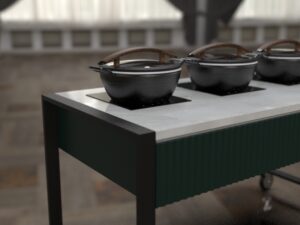
The Strategic Value of Modern Cooking Stations
In B2B hospitality operations, speed without structure leads to inconsistency. Structure without flexibility leads to inefficiency. Modern cooking stations balance both.
By integrating precision heating, organized storage, mobility, and durable construction, they enable venues to increase service speed while safeguarding quality, safety, and brand perception.
For hotels, banquet halls, and large-scale restaurants, investing in the right cooking infrastructure is not simply about faster output — it is about building a service system that performs reliably, consistently, and professionally at scale